
'Nobody will wait now. Everyone will come to deposit their old notes. The confidence is shaken.'

There is not much bank employees can do, but some words of encouragement from the management would have helped. Stretched working hours and the tense atmosphere is taking a toll on their health.
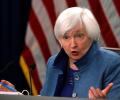
Hawkish guidance by the US Fed raises concerns it could tie the hands of RBI from trimming rates.

RBI said the outlook for economic growth for 2016-17 has turned uncertain after the unexpected loss of momentum by 50 basis points in Q2 and the effects of the withdrawal of banned notes

The theory that all banned notes will come back into the system may not be true. Anup Roy finds out.

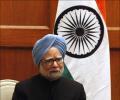
Experts say it will now be tough for the Modi government to catch up with the UPA's economic record owing to the shock induced by the currency demonetisation.

The huge pressure on the currency market largely went unnoticed because of the demonetisation exercise.

RBI on Monday conducted an unprecedented level of liquidity infusion to the tune of Rs 3.3 lakh crore, in which banks bid for as much as Rs 4.5 lakh crore. The central bank said it would conduct a liquidity infusion auction of Rs 1 lakh crore on Tuesday as well, to help banks tide over the liquidity crisis.

People depositing money with banks in legal tender are allowed to withdraw the equivalent amount without any restriction.

Corporate indebtedness is now twice what it was before the global financial crisis; banks' bad loans ratio is 3.5 times higher.
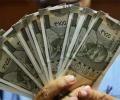
When banks deposit their money with RBI, the central bank offers government securities of equal value. But now, it could be running out of enough securities to offer banks against the overnight deposits.

'There has to be an 18-month transition.' 'But if the government had some prior knowledge that the high value notes were being used for an imminent terrorist activity in the country, then we have to accept the step.'


With about 2,000 qualified engineers to service ATMs across the country, it is an uphill task to modify 220,000 machines.

The first tranche was raised a few weeks ago and the company was looking to raise more if needed.
Will demonetisation lead to a rate cut, leading to higher quantum of lending?

A government can't just take away public money, and the RBI can't extinguish its liability. 'The RBI has to honour the value any time a person with legal and taxed money lays claim on the value.'

If RBI has to replace the entire stock of Rs 1,000 and Rs 500 notes with Rs 100 ones, the cost would be more than Rs 10,000 crore.
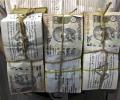
Even if RBI partially replaces the stock of the high value notes, RBI will have to incur thousands of crores of rupees in cost, say economists.
 © 2026 Rediff.com - Investor Information - Advertise with us - Disclaimer - Privacy Policy - Sitemap - Feedback - About us - Terms of use - Grievances